New article: priming effect of early heat stress in wheat
Download Pdf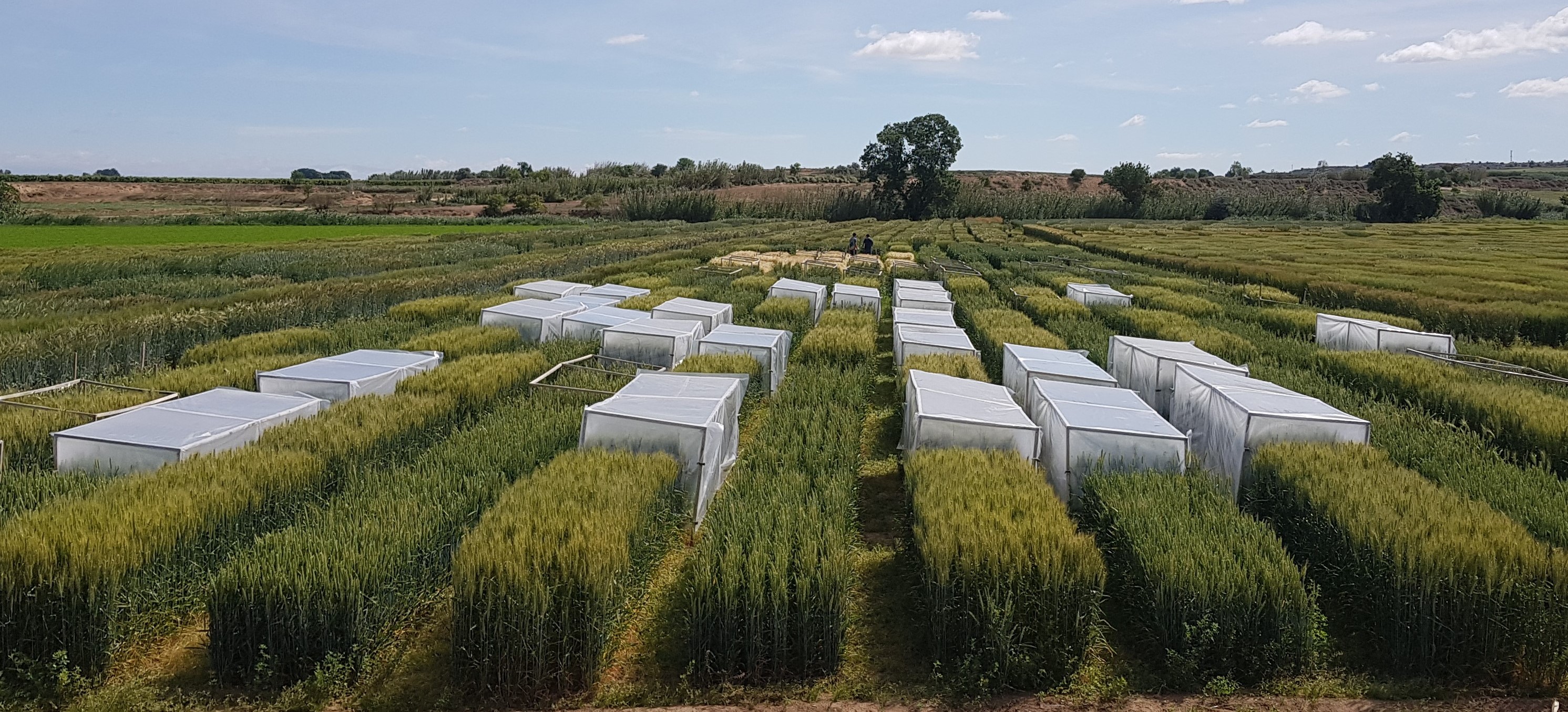
A recently published paper from our lab is attracting media attention, with coverage of the study featured by both EurekAlert! and Phys.org. The article by Bicego et al. investigates how the timing and recurrence of heat waves affect wheat yield under field conditions. The experiments were conducted over two growing seasons using two modern wheat cultivars with different yield formation strategies. Heat waves were imposed at booting (pre-anthesis), 15 days after anthesis, and sequentially at both stages, allowing the researchers to compare the effects of heat exposure during different phenological stages and following previous heat stress.
The study showed that heat waves at pre-anthesis mainly reduced grain number, whereas those after anthesis primarily reduced average grain weight. Across genotypes and experiments, yield was reduced by approximately 14% by pre-anthesis heat waves and 36% by post-anthesis heat waves, although the latter treatments were more severe. Moreover, when yield penalties were normalized by heat load above 32 °C, wheat was more sensitive during the period of grain number determination.
Importantly, when heat waves occurred sequentially before and after anthesis, their effects were antagonistic, indicating a priming response whereby the first heat wave reduced the yield penalty associated with the subsequent event. This highlights the importance of considering previous stress exposure, developmental stage and heat wave intensity when developing crop models for predicting yield losses under future climate scenarios.